Prime Highlights
- Minister Prasert called for a shift from rote learning to competency-based education, with a focus on ethical AI use and critical thinking.
- President Wilert stressed that universities must create genuine learning processes, not just deliver education, with cultural skills central to leadership development.
Key Facts
- ICESML is an annual international conference hosted by Chulalongkorn University, one of Thailand’s leading academic institutions, now in its fifth consecutive year.
- Thailand’s education system faces four structural challenges: falling birth rates, technology-driven inequality, geopolitical disruptions, and climate change impacts on student welfare.
Background
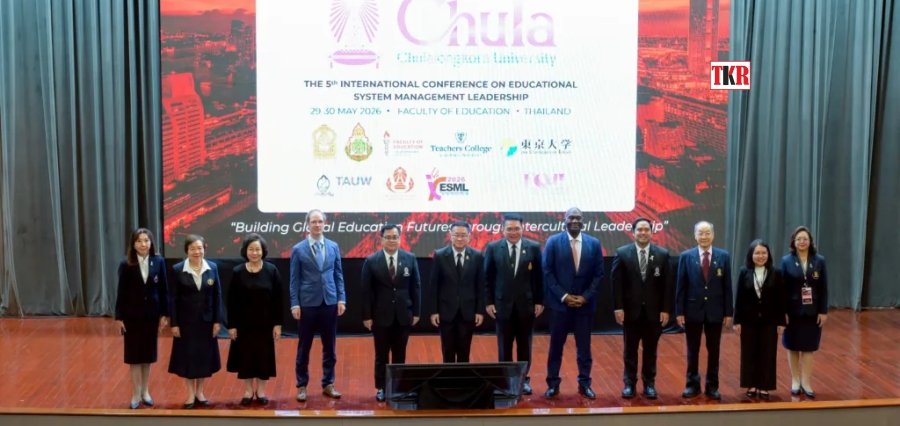
A forum for the Future of Education was held at Chulalongkorn University, with global educators, policymakers and academicians coming together to discuss the future of education at an international forum. The official inauguration was done by the Minister of Education of Thailand, Prasert Jantararuangtong, who also awarded the ESML Leadership Award 2026 to distinguished administrative figures working in early childhood, primary, secondary, vocational, and international education.
The conference acted as a podium to share knowledge in educational management and leadership. Among the eminent speakers were Asst. Prof. Sam Bamkin from the University of Tokyo and Assoc. Prof. Brian K. Perkins from Teachers College, Columbia University. High school students who advanced to the Model APEC Junior Thailand 2026 competition final round were also honored at the ceremony.
University President Wilert Puriwat said ICESML has run continuously for five years, focusing this year on intercultural leadership and emerging trends in educational administration. He stressed that universities must move beyond simply delivering education and instead build genuine learning experiences for students.
According to Minister Prasert, Thailand faces four major issues that include low birth rates, technology gaps, changes in geopolitics, and climate change. The Minister noted that Thailand needs to move from learning through memorization to competency-based learning as well as responsible artificial intelligence. In addition, Minister Prasert argued that budgets should prioritize investments in human capital rather than physical capital.
In other words, quality and equitable education are the basis of economic growth, and ICESML provides the opportunity to establish networks and implement policies in response to the fast-changing environment.