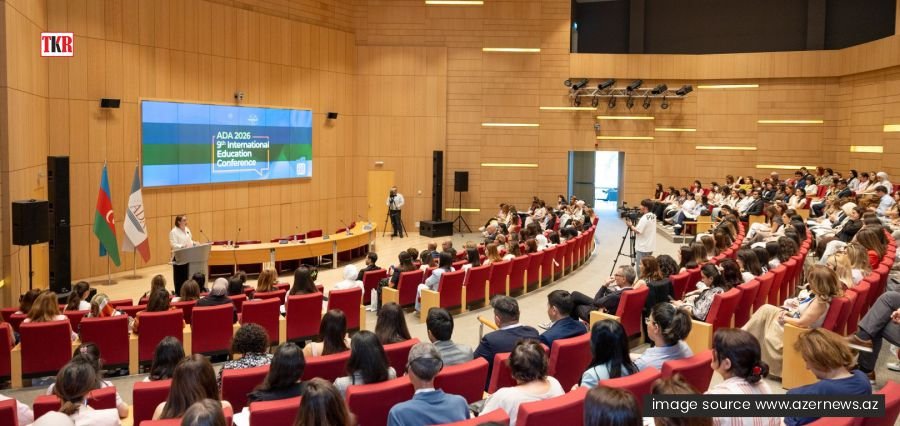
Education leaders, policymakers, researchers, and academics from multiple countries gathered in Baku for the 9th ADA International Education Conference to explore how education systems can adapt to rapid technologicala change, evolving labor markets, and the growing influence of artificial intelligence.
Held under the theme of pedagogical transformation, the conference focused on the future of teaching and learning in an increasingly digital world and highlighted the need for education systems to become more flexible, inclusive, and responsive to societal change. The event reflected growing international efforts to redesign education for the demands of the twenty-first-century economy.
Artificial Intelligence Reshapes Educational Priorities
Artificial intelligence emerged as one of the central themes of the conference, with participants examining how AI technologies are transforming classrooms, research environments, and workforce expectations. Discussions focused on balancing technological innovation with critical thinking, creativity, and human-centered learning approaches.
Education experts emphasized that future graduates will require not only technical competencies but also adaptability, collaboration skills, and the ability to navigate increasingly complex digital environments. The growing influence of automation and AI across industries is forcing educational institutions to rethink curricula and teaching methodologies.
Speakers also highlighted the importance of aligning educational outcomes with labor market demands while ensuring that technology enhances rather than replaces meaningful learning experiences. Building resilient education systems capable of responding to technological disruption was identified as a major priority for policymakers and institutions alike.
Research and Innovation Take Center Stage
A significant portion of the conference focused on strengthening research ecosystems and creating environments that support innovation and academic excellence. University leaders and international scholars discussed strategies for improving research capacity, encouraging interdisciplinary collaboration, and attracting global talent.
Participants emphasized that strong research institutions play a critical role in economic development, technological progress, and national competitiveness. Discussions also explored how universities can better connect academic research with industry needs and public policy priorities.
The event featured conversations on improving higher education quality while creating opportunities for students to access world-class learning experiences without necessarily pursuing studies abroad. Education reforms aimed at improving domestic academic institutions are increasingly viewed as essential for retaining talent and supporting national development goals.
Collaboration Drives the Future of Education
Another major focus of the conference was the importance of collaboration among governments, universities, educators, parents, and students in shaping the future of education. Participants explored how curricula can become more responsive to social realities and changing student expectations.
The discussions highlighted the need for education systems that prepare learners not only for employment but also for responsible citizenship and lifelong learning. Inclusivity, accessibility, and adaptability were repeatedly identified as essential characteristics of modern educational ecosystems.
The conference attracted more than 230 participants from eight countries, creating opportunities for knowledge exchange and international cooperation on some of the most pressing challenges facing education today. The event also reinforced Azerbaijan’s growing role as a regional center for international dialogue on education, innovation, and human capital development.
As educational institutions worldwide navigate rapid technological and economic change, the conversations taking place in Baku reflect a broader global effort to ensure that learning systems remain relevant, resilient, and capable of preparing future generations for an increasingly interconnected world.
Read More: Legal Education Debate Explores AI’s Impact on Skills and Knowledge Development