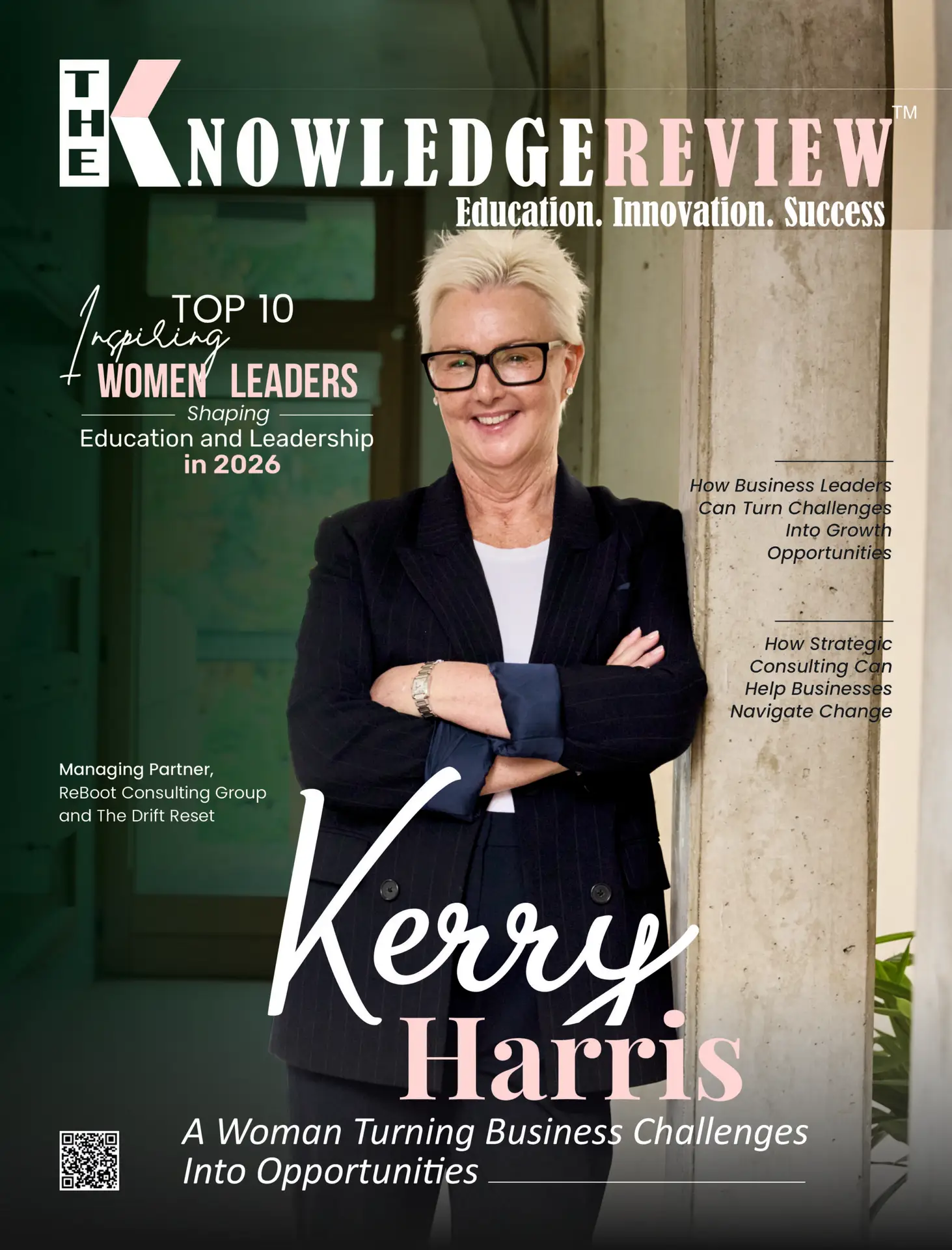
Some careers follow a straight line. Kerry Harris has built hers through movement, reinvention, challenge, and curiosity. Her professional life has crossed industries, countries, business models, and leadership roles. Each chapter has added a new skill and a different perspective.
Today, Harris serves as Managing Partner at ReBoot Consulting Group and The Drift Reset, where she works with organizations facing moments of change. Her work focuses on strategy, transformation, growth, communications, brand health, and new market development. She brings decades of experience across client and agency environments, including senior leadership at Weber Shandwick Canada.
Her approach comes from experience rather than theory. She has built companies, led teams, managed through economic uncertainty, worked across international markets, and learned from decisions that did not go as planned. She sees failure as part of professional growth and believes that resilience, curiosity, and the willingness to keep learning matter more than having all the answers.
Turning Unexpected Opportunities Into a Lasting Career
Harris grew up in a small city in Northwestern Ontario, where she developed an early understanding of discipline through sport. She became a nationally ranked 100-metre sprinter while still in high school and later competed with the University of Toronto track club. An injury ended her competitive career, but the experience left her with lessons that continue to influence her work.
Track taught her tenacity, focus, discipline, and flexibility. It also taught her how to remain composed when circumstances change. Those lessons later became useful in business, where uncertainty often arrives without warning.
After university, Harris worked three part-time jobs while searching for a full-time opportunity. She eventually moved to Western Canada and spent three years managing a busy marketing department for a Saskatoon-based company.
A very different opportunity then took her to Houston, Texas. She joined a company producing travel documentaries and worked as a field producer for two years. The role allowed her to travel extensively and experience places and cultures around the world. She filmed from a helicopter over Sydney Harbour Bridge, mustered cattle in the Australian Outback, explored the Gold Coast and Great Barrier Reef, and played golf at St Andrews in Scotland.
The experience broadened her perspective and strengthened her interest in working across different environments. After returning to Canada, she joined a major hotel company before moving into an integrated marketing agency, where she launched its public relations division.
At 34, while raising a two-year-old child, Harris started her first business with a partner. They began in shared office space and gradually built the company into an international agency over the next decade. Her work took her across South Africa, the Caribbean, and Latin America, where she worked with governments, private organizations, and not-for-profits across tourism, lifestyle, financial services, and charitable sectors.
Her business partner became an important mentor during that period. Harris credits the experience with helping her mature as a leader and business owner. After ten years, she decided to pursue new opportunities and sold her equity in the company.
She later spent time with a global advertising agency and a specialist strategy firm. Those experiences prepared her for a major leadership role as President of Weber Shandwick Canada, part of the IPG network.
Over time, her work moved increasingly toward advisory leadership. She now brings that experience to consulting, where she helps organizations understand where they stand, determine where they need to go, and develop practical ways to move forward.
Her journey has not been without setbacks. Harris speaks openly about poor decisions, misplaced trust, difficult partnerships, and professional disappointments. Rather than viewing those experiences as interruptions, she considers them some of her most valuable teachers.
Building Practical Pathways for Growth and Transformation
Harris leads ReBoot Consulting Group and The Drift Reset with a focus on organizations facing important moments of change.
ReBoot works with clients at a crossroads and develops measurable plans for transformation, growth, communications, brand health, and new market development. The firm combines established processes with technology and AI to examine business challenges from multiple perspectives.
Its model extends beyond traditional strategic advice. ReBoot can support a client from the initial strategy work through to implementation and the development of a go-to-market plan.
The organization has also expanded significantly since its early days as a brand strategy firm. Its capabilities now include growth strategy, transformation strategy, crisis and issues management, reputation management, internal and external communications, and brand health.
Mutual respect, transparency, and honesty guide its relationships with clients. Harris believes those principles need to work both ways.
One of the projects that best represents the firm’s impact is Remai Modern, a 650,000-square-foot contemporary art museum in Western Canada. ReBoot partnered closely with the museum’s CEO and Board to shape, develop, and launch the institution and its brand, bringing the project from concept to completion.
The project lasted seven years and involved many stakeholders. Harris considers it the most demanding project she has undertaken and the professional accomplishment she feels most proud of. The opening became especially meaningful because of the relationships she developed with staff, artists, and the surrounding community.
Leading With Purpose Across Multiple Priorities
Harris’s current responsibilities span new business development, client service, operations, and new product development. Her days often include calls, presentations, mentoring, teaching, networking, ideation, and conversations with prospective clients.
She divides much of her working time into three areas. One part goes toward client work. Another focuses on internal responsibilities. The third centers on business development.
She also protects time for strategic thinking, networking, exercise, family, and quiet reflection. This structure helps her remain engaged with the business without allowing work to consume every part of her life.
The variety keeps her motivated. Harris enjoys the fact that every day brings something different. She values the opportunity to work with clients, observe transformation, and help organizations move through periods of growth and change.
Technology now demands a significant share of her attention. She follows developments in AI and tracks changes across the sectors in which she works.
Curiosity remains one of the most important qualities in her role. She also values agility and the ability to adapt without becoming overwhelmed by small problems.
Turning Difficult Moments Into Opportunities to Grow
Consulting continues to change as technology develops. Harris sees AI as one of the biggest forces affecting the industry and believes consultants need to understand how it will influence their sectors.
She has also faced a more personal challenge throughout her career. Every new role brought a period of learning. Some opportunities felt intimidating at first, but those moments often produced the greatest professional growth.
Her experience at Weber Shandwick provided one of her most difficult leadership tests. During the 2008 and 2009 economic downturn, she had to make decisions about staffing while leading the Canadian business. Those choices carried serious consequences for people and the organization.
Instead of simply reducing the business, Harris and her team focused on adding new work. Their efforts helped the organization navigate the downturn while maintaining its headcount.
The experience reinforced her belief in resilience. She sees flexibility as essential to long-term leadership because difficult periods rarely follow a predictable schedule.
Her response to uncertainty remains straightforward. She reminds herself that difficult periods will pass and that she has managed to land on her feet before.
Exercise, family time, sleep, and occasional wine help her maintain perspective. She also believes leaders should avoid becoming consumed by every problem.
Her years of experience have taught her that continuous learning matters more than trying to appear like the smartest person in the room.
Giving Great People the Freedom to Do Great Work
Harris keeps her leadership philosophy simple. She believes leaders should hire great people and then give them the freedom to do their jobs.
Trust starts with action. For Harris, leaders build credibility by doing what they say they will do. Mutual respect and honesty form the foundation of a healthy working relationship.
She also believes employees should feel that they own part of the organization’s success. She brings people into important conversations and asks what they believe matters for the future. When people understand their contribution, they become more invested in the outcome.
Harris also separates good leadership from exceptional leadership. A good leader meets company goals. An exceptional leader meets those goals while helping individual team members reach their own goals.
That distinction reflects her broader view of leadership. Business results matter, but people should not disappear behind them.
Helping People Find Their Strength and Direction
Harris builds teams around clarity. People need to understand their responsibilities, their deliverables, and the part they play in achieving a wider objective.
She also establishes clear rules of engagement. Her preference for a workplace without internal politics reflects her belief that teams perform better when people communicate directly and treat each other with respect.
Mentorship plays a major role in her work. She regularly mentors emerging leaders and also serves on the board of a nonprofit organization focused on emerging leaders internationally.
She encourages people to identify what they want from their careers and then take calculated risks toward those goals. She supports that process through professional development and opportunities for exploration.
Harris also believes emerging leaders need room to fail. Without that space, people cannot develop judgment and confidence through experience.
Her own record of mentorship demonstrates the value of that approach. At her first agency, eight junior consultants worked with her. At least half later went on to lead agencies or organizations. Their progress remains one of the accomplishments she values most.
She looks for curiosity, resilience, quiet confidence, and quick thinking when identifying future leaders.
Turning Ambitious Ideas Into Meaningful Accomplishments
Harris’s career includes several major accomplishments. She built her first agency from the ground up, developed an international business, created a SaaS company, established her consulting firm, and worked across numerous sectors and international markets.
The Remai Modern project stands apart because of its scale and complexity. Seven years of work brought together strategy, branding, stakeholders, artists, staff, and the community.
For Harris, the project’s greatest significance came from seeing the museum open after years of work. The achievement went beyond creating a brand. It created a cultural institution with a lasting presence in Western Canada.
Her international career also shaped her understanding of business. Working with governments, companies, nonprofits, and leaders across different regions taught her to recognize differences in markets while looking for the common factors that influence organizational change.
Today, she continues to build on those experiences through consulting and advisory work.
Preparing for the Next Chapter of Leadership
Harris plans to continue growing her consulting group over the next several years. Her longer-term plan includes selling the business and moving toward a different professional chapter.
She hopes to spend more time teaching, writing, and speaking. Mentoring will remain part of that future.
She also sees major changes ahead for organizations. AI will continue to reshape consulting and other sectors. At the same time, workforce expectations will change as younger generations take on greater responsibility and experienced professionals retire.
Harris points to the retirement of the Baby Boomer generation as an important issue because organizations risk losing valuable knowledge and experience with those departures.
She believes companies need to prepare for these shifts rather than simply react to them.
For her own next chapter, success means remaining challenged while maintaining profitability. She wants to continue working with people who value innovation, trust her judgment, and remain curious about change.
Learn From Experience and Find the Right Mentor
Harris believes consulting rewards experience. In her view, professionals do not simply enter the industry. They mature into it.
For those who want to build toward a consulting career, she recommends finding a mentor and planning.
She also advises emerging leaders to avoid becoming too dependent on one department or sector. Unless someone wants to remain within one area, career development should focus on building transferable skills.
Her advice reflects her own experience across industries and roles. Each move gave her another capability and another perspective.
She also encourages future leaders to remain fluid. Technology, markets, organizations, and people continue to change. Leaders who stop learning can quickly lose relevance.
Her advice to her younger self remains simple. Do not sweat the small stuff. Difficult periods pass.
Harris also believes leaders need to understand how AI may affect their sector. That question should sit near the center of strategic planning for organizations across industries.
A Leadership Legacy Measured by the People She Inspired
Harris’s desired legacy has little to do with titles.
When she graduated from university, she had no mentor, no established network, and no clear path into the workforce. She remembers how difficult it felt to search for opportunities during a challenging economic period.
That experience shaped her desire to help people who stand where she once stood.
She wants to become a source of support for emerging leaders. She wants people to know they can reach out when they need guidance or a helping hand.
Her work with young professionals, founders, female entrepreneurs, and students reflects that goal. She mentors through Ivey Business School, speaks with female founders, and works with new founders as they plan their businesses and careers.
She hopes people will remember that they enjoyed working with her, learned something from her, and had enough space to shine.
Her leadership legacy rests on the same principle. Encourage people to stretch, give them opportunities to grow, and trust them with meaningful responsibility.
Outside work, Harris enjoys travel, reading, and golf. She has visited every continent except India, which remains on her travel list. She also carries a simple personal philosophy that reflects her view of life. Eat the cake, buy the shoes, and drink the wine because tomorrow can bring something unexpected.
That outlook does not diminish the seriousness of her work. It explains how she approaches it. She takes responsibility, keeps learning, looks after the people around her, and does not allow setbacks to define her.
For Harris, leadership is not a destination. It is an ongoing process of learning, adapting, helping others, and getting the work done.
Perhaps the simplest description of the career she hopes to leave behind comes from her own words.
“She got it done and was a blast to work with.”