What is curriculum development in the rapidly changing world of education? How do traditional schools, universities, and learning platforms design courses that stay relevant in a digital age? These questions emphasize that rethinking education design has become a major concern. Curriculum development is no longer a single framework that is left untouched; it is a living entity that changes with the shifts in society, technology, and culture.
Where the speed of information is such that it is usually outdated even before the printing of the textbooks, conventional teaching models appear to be old-fashioned. Teachers are now dedicated to coming up with curriculums that are lively and can be modified with the aim of equipping learners with skills like problemsolving, innovation, and digital literacy. Since the world education system is going all in for hybrid and personalized learning, curriculum designers should not be too rigid in their work, and they must also be aware of the necessity of flexibility. The purpose of the teaching is no longer to acquaint students with facts but to make them become lifelong learners who can survive in times of uncertainty. Hence, curriculum development is a deliberate move that secures the future of education.
How Curriculum Development Shapes Student Success
Curriculum development touches on almost every facet of children’s growth—from their critical thinking capacity to their adaptability in everyday life. Fundamentally, a well-conceived curriculum charts out progress not only for teachers but also for students. It specifies the knowledge to be imparted, the methodologies to be used, and the expected results. To put it simply, curriculum development serves as the framework of the student’s journey.
Effective curriculum development brings teaching goals in line with student needs, thus making education remain relevant, practical, and forward-looking.
An efficiently planned curriculum marries theoretical knowledge with its practical use in the world. For example, the focus in the sciences is rapidly shifting towards work done by the students through experiments and data collection instead of learning by heart. Similarly, literacy programs advocate digital storytelling and multimedia projects. All these show how curriculum developers must interpret changes in the world while still holding on to a solid education structure.
Besides, curriculum development ensures that the world of learning and teaching is accessible to everyone through its focus on different learning styles, thus catering to the wide range of researchers and methods present in education. Understanding and embracing ethnic diversity, emotional intelligence, and the different abilities of students help to make learning fairer. By centering students in learning design, teachers give them the power to decide on their education. When learners realize the link between what they study and how they can use it outside the classroom, motivation among them naturally escalates.
Essential Elements in Modern Curriculum Design
Present-day curriculum development hinges on a number of fundamental points that guarantee the effectiveness, relevance, and attractiveness of a program. Although subject knowledge is still of great importance, teachers have to cross the border between different disciplines and teach there as well by skill-setting, such as critical thinking and collaboration. These skills, which, apart from the passing of tests, are a preparation for life after school, equip students with the necessary capabilities.
A well-rounded curriculum comprises clear goals, engaging methods, suitable assessments, and consistent evaluation to ensure ongoing progress.
The very first point is that of establishing clear learning objectives. Every class ought to have goals that can be measured and that specify what students must be able to do after the course is completed. Then comes instructional design, which integrates teacher methods and desired learner results. By involving students in real-world tasks, enabling them to debate with their equals, and providing users with audiovisual materials, everything becomes not only more attractive but also easier to memorize.
Another indispensable element is examination. The traditional modes of testing are gradually being replaced by the new ones—performance-based—where the student presents the comprehension through a project, a portfolio, or a speech. This means that the student is encouraged to use his/her creativity and problem-solving skills. Evaluation that is ongoing guarantees that the syllabus is not only in accordance with students’ growth but also with the needs of the society. Curriculum developers are always mediating and modifying their content so as to be in tandem with changes in the industry, trends in the world, and innovations in pedagogy.
Technology’s Role in Curriculum Development
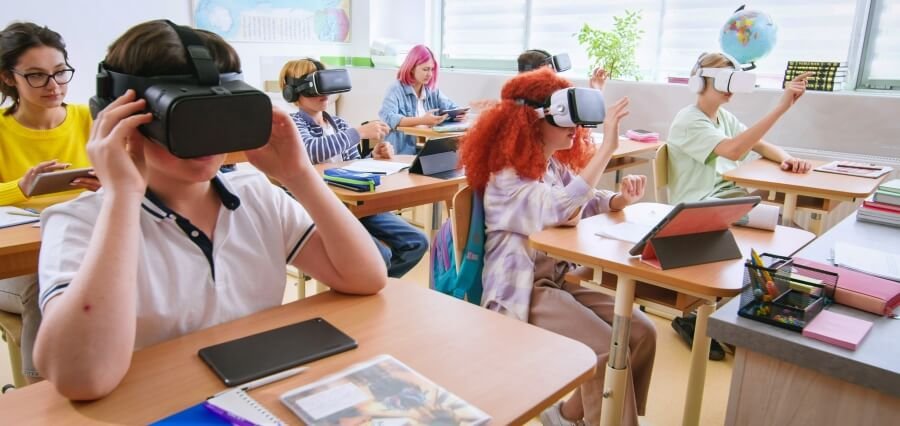
Each year the integration of technology in curriculum development becomes more significant. Educational technology largely contributed to the transformation of the classroom into a digital ecosystem, where learning activities are not limited to the use of textbooks. Teachers can personalize the learning content and have a better overview of the students’ progress with the help of tools such as LMS, AI, and data analytics.
Technology empowers curriculum development to allow personalized learning, real-time feedback, and global collaboration opportunities.
By utilizing technology, curriculum developers are able to set up personalized study plans that match individual student requirements. As a matter of fact, software can suggest particular activities if it finds that the student is weak in certain areas; thus, it ensures that no learner is left behind. Also, data notations are a great help to the teacher in refining their instruction and, therefore, increasing their effectiveness.
Furthermore, digital education gives the opportunity to institutions to communicate with bigger target groups. Online classes, open resources, and digital certificates are some of the ways through which education becomes accessible to global learners. Nevertheless, on the one hand, technology has attractive features; on the other, it calls for a cautious approach. A curriculum that simply puts in tech without the pedagogical aim may confuse rather than involve students. The good developers use the balanced approach to engagement, interaction, and creativity, not to diminish the human contact.
The Future Vision for Curriculum Development
When we talk about the future of curriculum development, the three main features around which the development will revolve are adaptability, inclusiveness, and innovation. The future education programs will not only be flexible, but also they will be perpetually modified with the input of teachers, education authorities, academic researchers, and tech experts.
The future of curriculum development is based on core principles of flexibility, inclusiveness, and lifelong learning underpinned by continuous innovation.
The term “fixed” curriculum will become a thing of the past with the emergence of learning systems that are responsive and therefore update themselves as knowledge grows and changes. The subjects might continue to develop in real time by adapting to student feedback and new global challenges. Machine learning will take over routine work and provide assistance in analyzing learning patterns, while virtual and augmented realities will offer engaging educational experiences.
Inclusiveness is another factor that will be emphasized more and more in the future curriculums. Future school programs will focus more on social-emotional learning, ecological education, and cultural fluency—competencies necessary for living in a diverse and interconnected world. The objective will be not only to equip the students with the skills and knowledge needed for the labor market but also to instill in them the values of the global community.
To sum up, curriculum development is not about the mere planning of lessons; rather, it is a matter of how we learn and live. As the society evolves, so does the curriculum, which has to prepare the forthcoming generations to be critical thinkers, empathetic doers, and ethically guided innovators. The future of education is reserved for those who perceive learning as a lifelong journey and curriculum development as a guiding map.