The International Atomic Energy Agency (IAEA) and the University of Saskatchewan (USask) have signed a new three-year cooperation agreement to strengthen nuclear education, knowledge management, and workforce development as global demand for nuclear energy continues to grow. The partnership is designed to prepare skilled professionals capable of supporting the expanding nuclear industry worldwide.
According to the IAEA, the agreement includes joint training programmes, expert exchanges, educational resource development, and collaboration on nuclear knowledge management. It also supports research and capacity-building initiatives that will help universities and industry address the growing need for qualified scientists, engineers, and technical specialists.
The collaboration comes at a time when interest in nuclear power is increasing globally. The IAEA estimates that, under its high-growth scenario, worldwide nuclear generating capacity could more than double by 2050, making workforce development a key priority for countries planning to expand nuclear energy programmes.
IAEA Deputy Director General Mikhail Chudakov said the University of Saskatchewan has made significant contributions to nuclear science for decades, supporting advancements in nuclear energy, fusion research, medicine, agriculture, and hydrology. He emphasized that international partnerships are becoming increasingly important as global nuclear development accelerates.
Canada Strengthens Its Role in Nuclear Research and Training
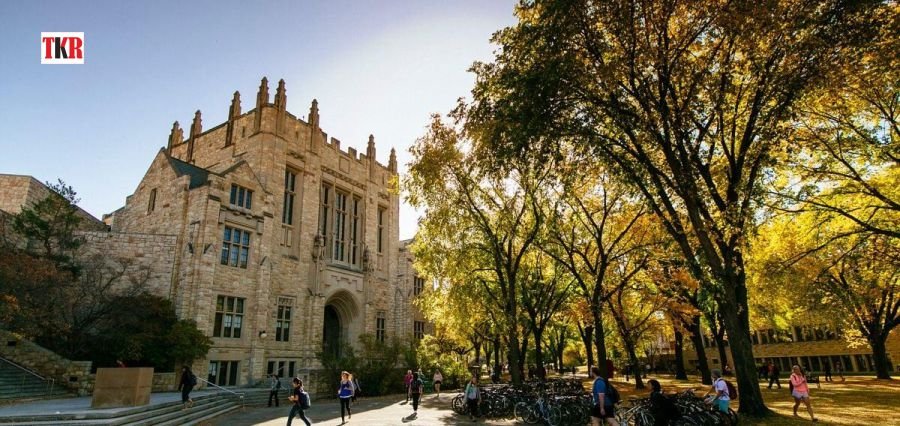
The agreement further establishes the University of Saskatchewan as one of Canada’s leading centres for nuclear education and innovation.
Reuters’ equivalent reporting was not involved in this story, but the IAEA and World Nuclear News noted that the university previously hosted the Canadian National Nuclear Energy Management School in 2025 and the Canadian Executive Nuclear Energy Management School in 2026 in partnership with the IAEA. These programmes provided advanced training for professionals, government officials, and industry leaders working in the nuclear sector.
Under the new agreement, the two organizations will explore integrating IAEA educational materials into Canadian academic programmes, developing case studies and methodologies for nuclear knowledge management, and expanding access to research facilities for education and training purposes.
University of Saskatchewan Vice President of Research Baljit Singh said the partnership will strengthen the university’s internationally recognized nuclear research programmes while connecting Canadian researchers and students with a broader global network of expertise. Associate Dean Jafar Soltan added that the agreement positions the university as a Canadian hub for nuclear training and innovation while creating new opportunities for the country’s nuclear industry.
With a mature nuclear industry, Canada plays a key role in electricity generation, medical isotope production, and advanced reactor innovation. The expanded partnership is expected to further enhance the country’s ability to train highly skilled professionals for future nuclear projects.
Collaboration Reflects Growing Global Demand for Nuclear Talent
The partnership highlights the increasing importance of education as countries invest in expanding nuclear energy to support energy security and lower carbon emissions.
As governments develop new nuclear power plants, small modular reactors, and advanced nuclear technologies, the demand for engineers, safety specialists, regulators, researchers, and plant operators is expected to rise substantially. Building and maintaining a qualified workforce has become one of the industry’s biggest long-term challenges.
Beyond energy production, nuclear science plays an important role in healthcare, agriculture, environmental monitoring, industrial applications, and scientific research. Expanding educational programmes helps ensure countries have the expertise needed to safely apply nuclear technologies across these fields.
The agreement also supports collaboration through the IAEA’s International Nuclear Management Academy, which helps universities establish master’s degree programmes in nuclear technology management and promotes international knowledge sharing among academic institutions.
Industry experts believe partnerships between international organizations and universities will become increasingly important as more countries pursue nuclear energy to meet rising electricity demand while reducing greenhouse gas emissions. Developing a skilled workforce will be essential to ensuring nuclear projects are delivered safely, efficiently, and sustainably.
The new collaboration between the IAEA and the University of Saskatchewan demonstrates how higher education institutions and international agencies can work together to prepare future nuclear professionals. By combining academic research, practical training, and global cooperation, the partnership aims to strengthen Canada’s nuclear capabilities while contributing to the worldwide expansion of safe and responsible nuclear technology.