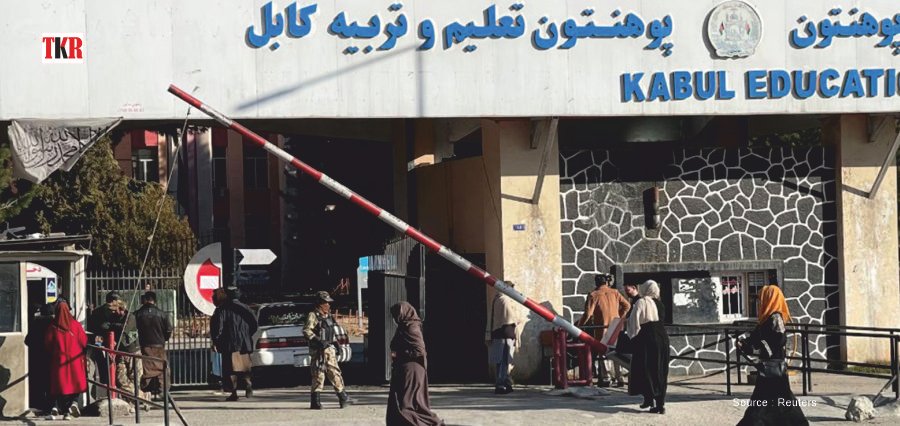
Seven Universities Face One-Year Suspension
Afghanistan’s Ministry of Higher Education has suspended the operating licences of seven private universities for one year and permanently cancelled the licences of two others following inspections of private higher-education institutions.
The action affects universities across several provinces and follows assessments conducted during the spring semester of the 1405 solar year. Authorities cited a range of alleged violations, including the presence of so-called “ghost students”, poor attendance records, administrative weaknesses and breaches of academic requirements.
The seven institutions facing a one-year suspension are Barlas University in Jawzjan; Rah-e Saadat and Turkistan universities in Balkh; Azhar and Barna universities in Badakhshan; Rashad University in Faryab; and Payam University in Kabul.
The licences of Kohanduz University in Kunduz and Khana-e Danish University in Takhar have been permanently revoked.
The inspections were intended to assess whether private institutions were meeting the academic and administrative requirements set by the Ministry of Higher Education. Findings highlighted concerns over the accuracy of student records, classroom attendance and the overall functioning of some institutions.
Inspections Reveal Gaps in Academic and Medical Training
The ministry identified several shortcomings beyond student attendance and administrative practices.
Inspectors reportedly found cases in which institutions maintained records for students who were not actually attending classes. Some universities were also accused of allowing students who were barred from examinations to sit for final exams.
In other cases, institutions were found to have scheduled classes but had empty classrooms during inspection visits. Authorities also raised concerns about whether some universities possessed the administrative and academic structures required to operate effectively.
Medical education attracted particular scrutiny. Some institutions were reportedly found to have inadequate laboratory equipment for students pursuing medical programmes. Concerns were also raised about practical training opportunities, including insufficient access to hospitals where medical students could gain hands-on experience.
The ministry further alleged that certain institutions were not following the curriculum approved by the authorities.
Such findings have raised questions about the quality and reliability of private higher education in Afghanistan. For students and families paying for university education, the availability of qualified teaching, functioning classrooms, proper academic records and practical training remains central to the value of a degree.
The licensing action therefore represents an attempt by the authorities to enforce minimum standards across the private university sector, although its consequences could be significant for students enrolled at the affected institutions.
Higher Education Faces Wider Pressure Across Afghanistan
The suspension of the nine universities comes as Afghanistan’s higher-education system continues to operate under severe pressure following the Taliban’s return to power in 2021.
Restrictions affecting women and girls have dramatically changed access to education across the country. Female students have been barred from attending universities, creating a major disruption to higher education and narrowing opportunities for women to pursue professional careers.
Private universities have also had to operate within an increasingly restrictive educational environment while dealing with financial, administrative and enrolment challenges.
Against that backdrop, the latest licensing action adds another layer of uncertainty for students attending private institutions. Those enrolled at universities whose licences have been suspended may face questions over the continuation of their studies, transfer arrangements and recognition of academic credits.
For the two universities whose licences have been permanently cancelled, the disruption could be particularly significant.
The authorities’ decision also sends a wider message to Afghanistan’s private education sector that compliance with academic standards will remain under scrutiny. Universities are expected to maintain accurate student records, follow approved curricula, provide appropriate facilities and ensure that professional programmes meet practical training requirements.
The immediate priority for affected students will be clarity over how their education will continue. At the same time, the broader challenge remains ensuring that Afghanistan’s higher-education system can provide credible, accessible and adequately resourced academic opportunities amid the country’s continuing educational restrictions and institutional pressures.