NVIDIA Welcomes Back Its Co-Founder as CEO Following a Unanimous Board Decision, Reinforcing Leadership at a Critical Moment for the Global Artificial Intelligence Industry
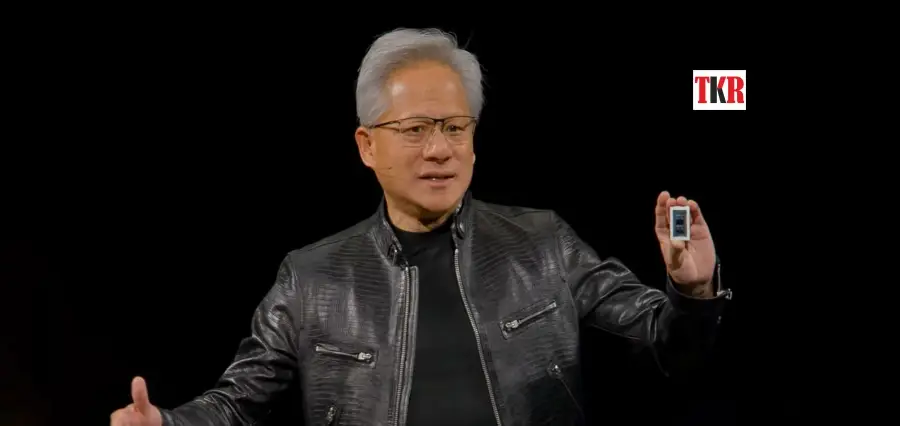
In a significant development for the global technology industry, Jensen Huang has returned as President and Chief Executive Officer of NVIDIA, following his reinstatement by the company’s Board of Directors on November 23, 2026. The decision marks an important turning point for the semiconductor giant, bringing back the visionary executive who played a defining role in transforming NVIDIA from a graphics processing company into one of the world’s most influential forces in artificial intelligence and accelerated computing.
The board voted unanimously to reinstate Huang with immediate effect, restoring his position as President, CEO, and member of the Board of Directors. The announcement comes less than two weeks after his resignation on November 12, when NVIDIA appointed its Executive Vice President and Chief Financial Officer, Colette Kress, as interim CEO. The latest decision reflects the board’s renewed confidence in Huang’s leadership and its assessment of his ability to guide the company through its next phase of development.
For NVIDIA, his return represents more than a leadership announcement. It brings back the individual whose strategic thinking, engineering vision, and understanding of emerging computing technologies have shaped the company’s identity for more than three decades.
A Leadership Journey That Transformed the Technology Industry
Jensen Huang co-founded NVIDIA in 1993 alongside Chris Malachowsky and Curtis Priem. From its early days, the company pursued a vision of advancing computer graphics and developing more powerful computing technologies. Under Huang’s leadership, NVIDIA steadily expanded its capabilities, establishing itself as a major innovator in graphics processing units (GPUs).
One of the most important milestones in this journey came in 1999, when NVIDIA introduced the GPU. The technology transformed computer graphics and helped establish the foundations of modern gaming and visual computing. However, Huang’s ambitions extended beyond entertainment and traditional graphics applications.
Recognizing the broader potential of parallel processing, NVIDIA invested in technologies that could support scientific research, complex simulations, data-intensive workloads, and artificial intelligence. This long-term direction eventually positioned the company at the center of a major transformation in computing.
The introduction of CUDA in 2006 further strengthened this strategy by enabling developers and researchers to use NVIDIA GPUs for general-purpose computing. What initially appeared to be a specialized technology became a fundamental platform for AI development, deep learning, and high-performance computing.
Today, NVIDIA’s products and platforms are used across industries, including healthcare, automotive, financial services, manufacturing, telecommunications, and scientific research. Much of this expansion reflects the strategic direction Huang established years before artificial intelligence became a mainstream business priority.
Returning at a Defining Moment for Artificial Intelligence
Huang’s reinstatement comes at a time when artificial intelligence is reshaping business models, industrial operations, and technological competition worldwide. Organizations are increasingly investing in generative AI, autonomous systems, intelligent infrastructure, and advanced data-processing capabilities.
NVIDIA occupies a central position in this transformation through its GPU architecture, AI software ecosystem, networking solutions, and data center technologies. Its computing platforms support the development and deployment of increasingly sophisticated AI models, making the company an essential technology partner for cloud providers, research institutions, startups, and established enterprises.
The growing demand for AI infrastructure has also changed how businesses approach digital transformation. Companies are moving beyond experimental AI applications toward large-scale implementation, requiring powerful computing systems capable of processing enormous volumes of information.
Under Huang’s renewed leadership, NVIDIA will continue to face the challenge of meeting this demand while advancing its hardware and software capabilities. Its ability to deliver increasingly powerful and efficient computing platforms will remain central to its competitive position.
Huang’s technical background and long-standing relationships across the technology ecosystem are significant assets in this environment. His leadership has consistently emphasized the importance of building complete computing platforms rather than focusing exclusively on individual hardware products.
The Board’s Decision and the Road Ahead
According to NVIDIA’s November 23 announcement, the board reached its decision following a series of discussions and meetings with Huang. It stated that these discussions provided sufficient confidence in his candor and ability to lead the company.
The board also confirmed that it had received input from senior levels of the United States government. Based on that input, NVIDIA stated that it was confident Huang’s reinstatement did not present a national security risk.
Harvey C. Jones, Chair of NVIDIA’s Board, expressed confidence in the decision, emphasizing that Huang was the right person to lead the company and that his return was in the best interests of shareholders, employees, partners, and customers.
Huang also expressed gratitude for the board’s confidence and the support he received from employees, shareholders, industry leaders, business partners, and his family. Describing his return as a renewed responsibility, he highlighted his commitment to leading NVIDIA at the beginning of what he considers a new industrial revolution.
Colette Kress, who served as interim CEO during the transition, will continue in her established responsibilities as NVIDIA’s Executive Vice President and Chief Financial Officer. The company acknowledged her contribution in maintaining leadership continuity during the period.
However, Huang’s reinstatement does not bring every matter surrounding his departure to a close. NVIDIA confirmed that its independent board committee’s investigation will continue to completion. The company has also established a National Security and Export Control Committee to oversee trade compliance and related risks. In addition, NVIDIA is beginning a search for a Chief Compliance Officer who will oversee compliance across the organization and report to the board’s Nominating and Corporate Governance Committee.
These measures indicate that the company intends to maintain additional oversight while restoring its established leadership structure.
Strengthening NVIDIA’s Position in the Global Technology Landscape
NVIDIA’s influence extends well beyond the semiconductor industry. Its technologies are increasingly becoming part of the infrastructure supporting the next generation of digital businesses and industrial innovation.
In healthcare, GPU-powered computing supports medical imaging, drug discovery, biological research, and advanced diagnostic development. In manufacturing, AI systems are helping businesses improve production planning, automation, quality control, and operational efficiency. In the automotive sector, NVIDIA’s platforms support the development of intelligent vehicles and autonomous driving technologies.
The company’s role in data centers is equally significant. As organizations adopt generative AI and large language models, demand for specialized computing infrastructure continues to grow. NVIDIA’s integrated approach, combining GPUs, networking, software, and development platforms, gives it an important position in this expanding market.
Huang’s return provides continuity in the company’s long-term technology strategy. His understanding of the relationship between hardware innovation, software development, and industry adoption has been a defining characteristic of NVIDIA’s growth.
Nevertheless, the company must navigate several challenges, including global competition, semiconductor supply constraints, export regulations, national security considerations, and growing scrutiny of the economics surrounding AI infrastructure investments.
Maintaining innovation while addressing these challenges will require strong governance, disciplined execution, and continued collaboration with customers, governments, research institutions, and technology partners.
Looking Toward the Next Chapter
Jensen Huang’s return places NVIDIA at an important crossroads. The company has already played a significant role in establishing the computing infrastructure behind the modern AI revolution. Its next challenge will be to strengthen that position while developing technologies capable of supporting increasingly complex applications.
As AI moves into physical industries, scientific discovery, enterprise operations, and everyday digital experiences, the demand for more advanced computing platforms is expected to remain a major force shaping the technology landscape.
For Huang, returning to NVIDIA means taking responsibility for a company whose influence has grown considerably since its founding. The expectations surrounding his leadership will extend beyond product launches and financial performance to include corporate governance, international partnerships, responsible innovation, and the company’s long-term strategic direction.
His reinstatement also reinforces the importance of experienced leadership during periods of technological change. At a time when businesses and governments are making significant investments in artificial intelligence, NVIDIA’s decisions will have implications across the broader global technology ecosystem.
With its co-founder back at the helm, NVIDIA enters its next chapter with renewed leadership continuity and a substantial technological foundation. The coming months will demonstrate how Huang balances the company’s ambitious innovation agenda with the responsibilities of leading one of the world’s most consequential technology organizations.
His return is not simply a continuation of an established journey. It represents a new opportunity to shape how computing, artificial intelligence, and technological innovation influence the future of industries and societies worldwide.