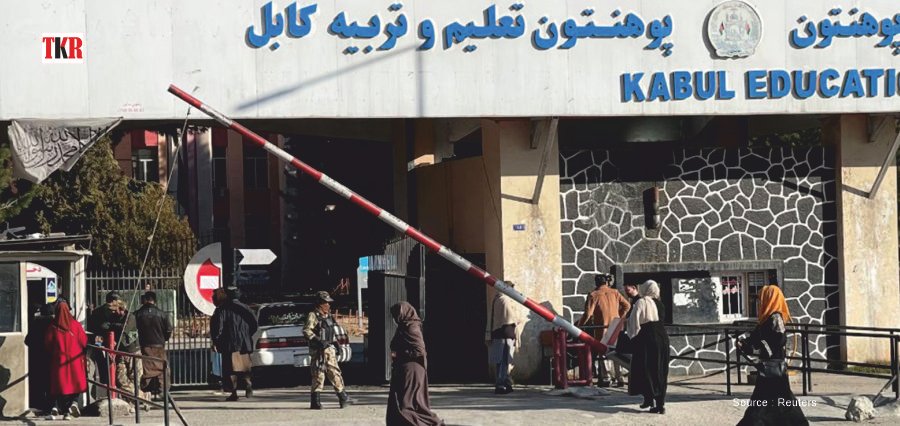
Today, education knows no borders, since economies, cultures, and technologies knit together with increased tautness. For this reason, education systems at every turn are compelled to respond to emerging changes. This is where the necessity for education policy analysis comes in: to enable governments, institutions, and relevant stakeholders to determine whether present policies fit both current realities and future ambitions. At the same time, global engagement as a force has deeply defined the ways in which policies are made, implemented, and evaluated across borders.
Education policy analysis: Understanding a world in constant change
Policy analysis in education represents the systematic study of how policies are framed, implemented, and measured in terms of their outcomes. It goes further than legislation and actual rules to consider real-life implications for students, teachers, and schools. In a rapidly changing world, such analyses are imperative in order to ensure that education systems remain relevant, inclusive, and forward-looking. With globalization redesigning job markets and skill requirements, policy analysis assists in identifying the mismatch between what students learn and what societies actually need. It maps the access to quality education, equity, relevance of curricula, teacher preparation, and funding structures. By weighing these factors, policymakers can redesign approaches so they respond both to local realities and global currents.
The Role of Global Engagement in Education Policy Analysis
Global engagement has changed the way education policy is envisioned. Countries no longer work in isolation; they watch, adjust, and sometimes borrow practices from others. The sharing of ideas, data, and experiences from education policy analysis gives many benefits to the research of analyses and leads to better and more effective policy choices.
The global involvement influences the nature of learning and acting by policymakers all over the world too. For instance, learning what works in education in other nations by checking international standards and comparing best practices contributes to policymakers worldwide learning new ideas from outside their own community and borders. This way, they are able to see their status in the world and clearly understand what they need to change and improve in order to increase competition and create adequate innovation in line with their societal development goals.
Global Engagement and Policy Learning across Nations
A notable consequence of this engagement is policy learning. Countries study policies carried out in other countries and find what works and what does not. The consequence is that analysis in the case of educational policy serves a purpose for the purpose of learning.
Consider digital education reform measures and how many countries seek to emulate what has been done well in others in terms of technological integration in education to inform what is likely to produce success in a different country. Similarly, inclusiveness in education and learning for a lifetime encourage governments to emulate what has been done in other countries through engagement with others around the world to produce results that may be suitable in a different cultural, economic, or social setting in a country.
Challenges in Education Policy Analysis: Amid Global Engagement
Nevertheless, global engagement also presents its set of challenges in policy analysis. It is possible that what works in one country might not necessarily achieve the same in another due to variations in government, resource availability, and cultural orientation, among others. Copying what is done globally could yield disappointing results in policy application.
However, the policy analysis must also be a delicate balance between global and national concerns. A proper comprehension of domestic concerns and the need to remain open to global information seem a necessity. Global engagement may also pose a danger of ignoring the indigenous knowledge and educational concerns of the country. All of the above concerns need a proper and sensitive manner of conducting policy analysis.
The Road Ahead for Education Policy Analysis in a World Connected
Going forward, the direction to take in analyzing education policy will depend on more effective and deeper engagement with the globe as a whole. This is especially true when it comes to such important and complex issues as global changes in climate, ICT, and work itself, all of which do indeed transcend borders.
The policy analysis will increasingly tap into the virtual networks globally to predict the skill requirements and how the society is likely to change. Moreover, the international engagement is going to shift the paradigm in a more holistic view of the nature and purpose of education, including considerations beyond the straightforward pursuit of economic development and prosperity, and embracing aspects such as social cohesion, ethical values, and sustainable development. The convergence of the ‘global view’ and ‘local wisdom’ makes the educational system more robust, flexible, and inclusive.
Accordingly, it can be noted that analysis of educational policy and global engagement are no more separable issues. Instead, it needs to be understood that they are the basis for all educational reform that takes place today.