The school curriculum is a central part of the education system. Besides the subjects, the school curriculum also helps form and shape the way students think, question, and mature as human beings. The curriculum remains the organized guide that directs the knowledge growth, the morals, and the life skills of a person from early childhood till higher secondary education. A well-designed school curriculum is not only about textbooks and tests; it is the representation of a society’s ambition for its upcoming generations. It also incorporates academic knowledge with emotional intelligence, creativity, and ethical awareness, making the learning process valuable and appropriate to life.
The role of school curriculum has stretched a lot in the present fast-changing world. The focus is not only on the memorization of facts or the incomparable subjects anymore. Instead, all the skills and faculties, such as curiosity, adaptability, and problem-solving abilities, are expected to be nurtured through the curriculum. As the jobs are undergoing changes and challenges are becoming more complex, the curriculum has to equip the students not only with the tools needed to pass the exams but also with those required for life.
Evolution of the School Curriculum in Modern Education
The school curriculum has been largely changed throughout the years. Traditional curricula were mostly rigid, content-heavy, and very much focused on the exam. Students and their achievements were mostly measured by the number of marks they had obtained rather than their level of understanding. Nowadays education systems are aware that such an approach puts severe limitations on children’s potentials. Thus, present-day school curriculum frameworks call for the focus on concepts, experiential learning, and the links between different disciplines rather than rote learning.
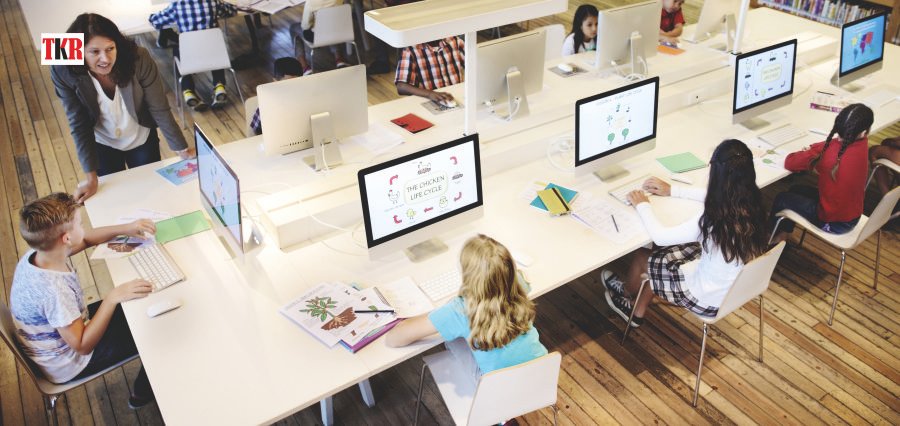
The change couldn’t have been possible without technology. New digital tools, online resources, and more engaging ways of learning have all impacted not only the manner of teaching but also the assessment of different subjects. The inclusion of such subjects as coding, environmental studies, financial literacy, and life skills in the school curriculum is evidence of this change. The shift towards practical knowledge that is in line with the demands of the real world is what this move is all about.
Besides that, the design of curriculum standards has been influenced by worldwide exposure and cultural diversity. Nowadays, schools’ goal is to form learners who are not only conscious of global issues but also firmly steeped in their local values. The changing school curriculum thus serves as a link between the past and the future, making sure that progress is embraced along with the preservation of the traditions.
Role of the School Curriculum in Holistic Development
The curriculum of a strong school will take care of the child’s holistic development, that is to say, focus on the cognitive, emotional, social, and physical aspects of growth, along with knowledge. Academic excellence is not enough nowadays. Students need to be provided with the means to enhance their communication skills, teamwork ability, leadership qualities, and emotional resilience. The curriculum is instrumental in making these opportunities available to students through the different subjects, school activities, and learning methodologies.
Creativity, discipline, and self-expression are virtues that are promoted through the involvement of arts, sports, and co-curricular activities, and these components have ceased to be regarded as the secondary ones. The moral education component, along with value-based learning, goes further to assist students in developing qualities such as empathy, responsibility, and honesty. When these components are integrated into the curriculum, the educational process transforms into a life-changing experience instead of a repetitive one.
Besides that, a flexible school curriculum empowers teachers to modify their instruction to meet the differing needs of their students. Each individual child has a different mode of learning, and an inclusive curriculum is in agreement with this variety. In this way, by promoting critical thinking and self-reflection, the curriculum provides students with the power to recognize their abilities and interests.
Challenges in Designing an Effective School Curriculum
Creating an effective school curriculum is not an easy job. It involves trying to balance a lot of different factors at the same time. One of the most difficult issues is how to keep the curriculum relevant in a world that changes so rapidly. What was valuable knowledge yesterday may be worthless today. Production of instructional materials should be uninterrupted so as to always stay up-to-date in this fast-paced world, while still recognizing the importance of dealing with the deep nature of the issues.
The second hurdle is in catering to different learning environments and socio-economic conditions of students. The same school curriculum would not be sufficient even if all children were from the villages, let alone countries, regions, or cities and the different cultures. Access, teacher qualifications, and facilities are among the factors that determine the level of education one can get in implementing the curriculum.
Another potential problem area is assessment methods. A minor one? Not quite. If evaluation systems only concentrate on memorization, a top-notch school curriculum may still not be able to fulfill its mission. The use of continuous assessment, project-based learning, and practical tests is the only way to really understand and apply knowledge.
The Future of the School Curriculum
The future of the school curriculum is all about flexibility, individualization, and learning for a higher purpose. Education systems are gradually shifting to a competency-based curriculum, which, instead of content, mainly focuses on skills. In the coming years, incorporation of the use of artificial intelligence, data analytics, and adaptive learning platforms will have a great effect on how the curriculum will be structured as well as how it will be delivered.
Climate change, mental health, and global citizenship are some of the topics that the school curriculum will most probably revolve around. Students will be made to analyze societal problems, and, in turn, they will be agents of positive change in their communities. Future educational programs will not provide answers; they will generate questions.
To conclude, a socially successful school curriculum is that one which changes as time passes but simultaneously maintains its essence: the raising of informed, confident, and empathetic individuals. If it is creatively constructed and smoothly carried out, it is an influential instrument that not only leads to desired academic results, but also the very nature of society changes.